
Family Values
Year-end ledgers, shame, and a way into the New Year
“Christmas was approaching. It was exhausting, and it always had been.”
Tove Jansson
Have you ever felt unease during the festive season, when obligations begin to eclipse joy? Buying and decorating a tree, travelling long distances, hosting and cooking, shopping for gifts, dressing up, over-eating and over-drinking, attending religious or social gatherings. One demand follows another, until participation itself feels like a test.
Beneath this accumulation sits the fear of failing. Failing to show up enough. Failing to give enough. Failing to embody the expected mood. This pressure follows an organised logic. It rests on an unwritten structure: the ledger.
This RIZOM PULSE issue names the ledger, traces how shame becomes its enforcement, and offers a simple release formula to carry into January.
PULSE
From Shame to the Structures that Prepare it
In the previous edition, we explored shame and the art of resolution: how shame narrows one’s life, and how resolution reopens it through attention and care.

Shame often travels through what is never said, rather than what is declared.
“Family norms are not transmitted by grand principles, but by repeated gestures, silences, and small arrangements of daily life.”
Jean-Claude Kaufmann, sociologist
This week, at year-end, we step one layer earlier. Shame rarely arrives first. Something prepares the ground for it, assigns it value, and attaches a price. Often, that something is a ledger.
Christmas and New Year operate as both celebrations and rituals shaped by cultural machinery and social expectation. Under the garlands and glitter, families and friends gather, inherited roles are reactivated, and entitlements and debts resurface.
How do family values live, circulate, and enforce behaviour?
INTEL
How obligation is distributed, concentrated, and normalised
1. Ritual intensifies accounting
Seasonal rituals compress attention into a short time window. What was previously diffuse becomes visible and comparable. Proofs of belonging and care are examined.
Are you coming?
Are you making enough effort?
That’s when and where the ledger moves to the foreground.
2. The family as a small central bank
Families often distribute legitimacy as if issuing currency.
Praise functions as credit.
Silence functions as penalty.
Sacrifice functions as proof.
Year-end rituals are when many people feel the interest rate and recognise that payment is due.
3. The organisational echo arrives at home
Work rhythms do not pause for the holidays. Many people carry their professional ledger into family space: over-responsibility, over-functioning, the fear of disappointing. Notice where ‘reliability’ has become a role, rather than a shared capability.
Family and workplace ledgers recognise one another easily. Overstretching through overtime mirrors overstretching the family budget on gifts and food. The same logic circulates, changing venue rather than structure.
INSIGHTS
Why invisible ledgers form and why they persist
1. How ledgers form
Ledgers begin as a protection strategy in conditions of uncertainty. When stability feels scarce, attention, responsiveness, and availability become anchors. Relationships can then tilt towards asymmetry, where one person becomes the reliable source of care and regulation for another. The pattern is rarely conscious. It is a risk-reduction reflex that binds commitment through obligation. Repeated care from the same person creates dependency, and what starts as bonding can harden into a record of who shows up, who holds, who absorbs. Over time, care stops circulating and becomes captured.
This is consistent with attachment research following John Bowlby (Attachment and Loss, 1969), and with findings on intermittent reinforcement and conditional belonging in social neuroscience. Organisational psychology echoes the same dynamic through relational contracts and emotional labour, where loyalty is secured through expectation rather than explicit exchange.
2. The symbolic ledger beneath care
The ledger we are exploring here rarely begins with conflict. At home as at work, it usually starts with ordinary requests that appear reasonable and proportionate. Someone checks that a message has been received. Someone asks what time another will arrive. Someone expresses a need, or states that a task can only be done properly by a particular person.
Nothing is demanded explicitly. Yet something is recorded. Effort, availability, emotional labour, compliance, and silence accumulate as credits and debits. Over time, these entries form a narrative that does not need to be spoken. You were reliable. You adapted. You endured. You did not complain.
From this narrative, obligation emerges. Having carried the load before, you are expected to carry it again.
This process does not distribute demands evenly, and it does not self-correct. Those who respond, adapt, and absorb pressure are called upon repeatedly. Those who withdraw, refuse, or contribute less often escape scrutiny altogether. The ledger rewards availability.
Responsibility concentrates on a few, while exemption becomes normalised for others. Endurance is mistaken for duty, and absence for entitlement. The ledger remains open-ended, so accumulation continues without balance.
Once established, the ledger does not remain confined to a single domain. It moves from family life into work, from work into leadership, and from leadership into the self. It survives because it travels easily, adapting its surface while preserving its logic.
3. Family gatherings and sibling dynamics
The asymmetry is particularly visible in family settings, especially during gatherings structured by ritual and expectation. Within sibling groups, roles are often assigned early and rarely revised. One child becomes the organiser, another the mediator, another the reliable presence. Others remain peripheral, protected by distance, temperament, or precedent.
As adults, these roles persist. The same person coordinates schedules, absorbs tensions, and ensures continuity. They are expected to show up, to adapt, and to smooth disruptions. When they hesitate, concern or disappointment follows. When others are absent, explanations are readily accepted.
The ledger operates silently. It does not ask why responsibility is unevenly distributed. It assumes continuity. The sibling who has always carried the weight continues to do so, not because of explicit agreement, but because the structure relies on their predictability.
Family values, in this sense, are less about shared principles than about repeated allocation of burden. Care circulates unevenly, and the imbalance is treated as normal.

4. The corporate echo: when asymmetry becomes structural
The same logic appears in organisations operating under continuous pressure. Budgets tighten, teams are reduced, and timelines compress. In these conditions, demands do not spread evenly: they concentrate.
Certain employees become load-bearers. They absorb gaps left by hiring freezes, stabilise teams during turnover, and resolve issues before they escalate. Their competence becomes visible, and visibility turns into expectation.
Others contribute less consistently, protect their boundaries more effectively, or remain partially disengaged. The system does not penalise this disparity. It adapts around it. Managers learn who will respond and who will resist, and work flows accordingly.
Responsibility accumulates on those who have already demonstrated reliability. Absence of effort often attracts less attention than visible competence. Praise replaces recognition. Flexibility replaces compensation. Trust replaces limits.
When pressure increases, the same individuals are approached again, justified by past behaviour rather than present capacity. When they hesitate, the response is framed as surprise or disappointment. Others may opt out. They may not.
The organisation remains functional, but the burden is unevenly distributed and rarely acknowledged. This is when care becomes infrastructure, and competence becomes exposure. The ledger hardens into structure.
5. Leadership teams and executive roles
At senior levels, the ledger does not disappear: it intensifies. Leadership teams often rely on a small number of individuals to carry ambiguity, absorb conflict, and maintain coherence. These leaders are praised for resilience, emotional intelligence, and strategic patience.
Over time, they become the default holders of complexity. They manage relationships, translate tensions, and protect the collective from fracture. Meanwhile, others operate with narrower scope, fewer demands, and greater tolerance for disengagement.
The asymmetry is rationalised as temperament, experience, or leadership style. In practice, it functions as a ledger. Some leaders are repeatedly asked to stretch, to stabilise, and to endure. Others circulate with lower cost.
At this level, the ledger is often mistaken for maturity. Endurance is framed as leadership quality. Over-functioning is reframed as commitment. The imbalance remains unnamed, and therefore intact. When one or two people become the default holders of coherence, the organisation confuses stability with health.
6. How shame enforces compliance
Across these contexts, shame acts as the ledger’s enforcement mechanism. It appears as the impulse to justify limits, the fear of being seen as unreliable, or the discomfort of setting boundaries when others do not. It also appears as the pressure to preserve harmony by absorbing more than one’s share.
Shame trains individuals to regulate themselves. Over time, repetition replaces explicit pressure. The system continues to operate without requiring overt demand.
IMPACT
What living under an interest-only obligation costs
At year-end, this debt economy becomes visible in everyday behaviour. Many people recognise it not through crisis, but through repetition.
Choices are explained at length, even when no justification has been requested.
Commitments are accepted too quickly, in order to avoid tension or disagreement.
One person ends up carrying logistics, coordination, and the emotional weather of the group, monitoring moods and smoothing friction so that others do not have to.
Family gatherings are approached less as moments of connection than as situations requiring performance, where one feels observed, measured, or assessed.
Alongside this sits a persistent concern about how one will be perceived. There is a fear of being dismissed, criticised, or judged for not fitting the expected role or tone. Belonging feels conditional, and participation feels like proof.
In organisations, the same pattern often passes under the name of professionalism. It appears as chronic over-delivery, disproportionate responsibility, and difficulty refusing additional work without guilt. Reliability becomes a personal identity rather than a shared organisational function.
Nothing overtly dramatic occurs. There is no single breaking point. Instead, energy drains gradually. A sense of injustice settles in, accompanied by fatigue, disengagement, or burnout. Some attempt to dull this strain through overwork, consumption, or other forms of self-soothing that offer relief without addressing the underlying imbalance.
The cost of the ledger is not immediate failure: it is actually slow erosion.
ECHO
Why fresh starts fail when the account never closes
By the end of the year, many people recognise a familiar strain that exceeds the demands of the season itself. The fatigue does not come from a single event or obligation, but from repetition, in terms of effort, availability, and emotional demands.
What returns is an interest-only loan. Payments are made regularly without reducing what is owed, because the account stays open. It feels like a state of permanent indebtedness.
That’s when many people reach for the language of renewal. New Year resolutions promise a fresh start, a reset, or a return to agency. They mark an intention to change habits, pace, or priorities, and to reclaim time, energy, or health.
Yet the same pattern often reasserts itself within weeks. The resolution is not abandoned out of lack of will, but because the underlying structure has not shifted. The invisible ledger continues to draw on the same reserve and prevents energy to be redirected.
This is the paradox of the moment. The calendar suggests a clean break, while the economy of obligation remains intact. Payments resume automatically, even as the language of change circulates.
Personal effort collides with structural continuity. Commitments reappear. Availability is assumed. Emotional labour is mobilised again. The principal remains untouched, while effort is extracted once more.
Unnamed, the ledger keeps its gravity. Resolutions are framed as individual failure when they de facto collide with a system that was never paused. The promise of a fresh start is repeatedly undermined by an account that never closes.
This is why the turn of the year so often brings frustration rather than renewal. Whilst the desire for change is genuine, what resists it is not habit alone, but a structure that continues to demand interest while presenting itself as invisible.
SIGNALS
Subtle shifts that interrupt automatic payment
As the year turns, disengagement from the debt economy does not announce itself through grand decisions or declarations. It appears through small, repeatable shifts that alter how the ledger is met, without attempting to dismantle it directly.
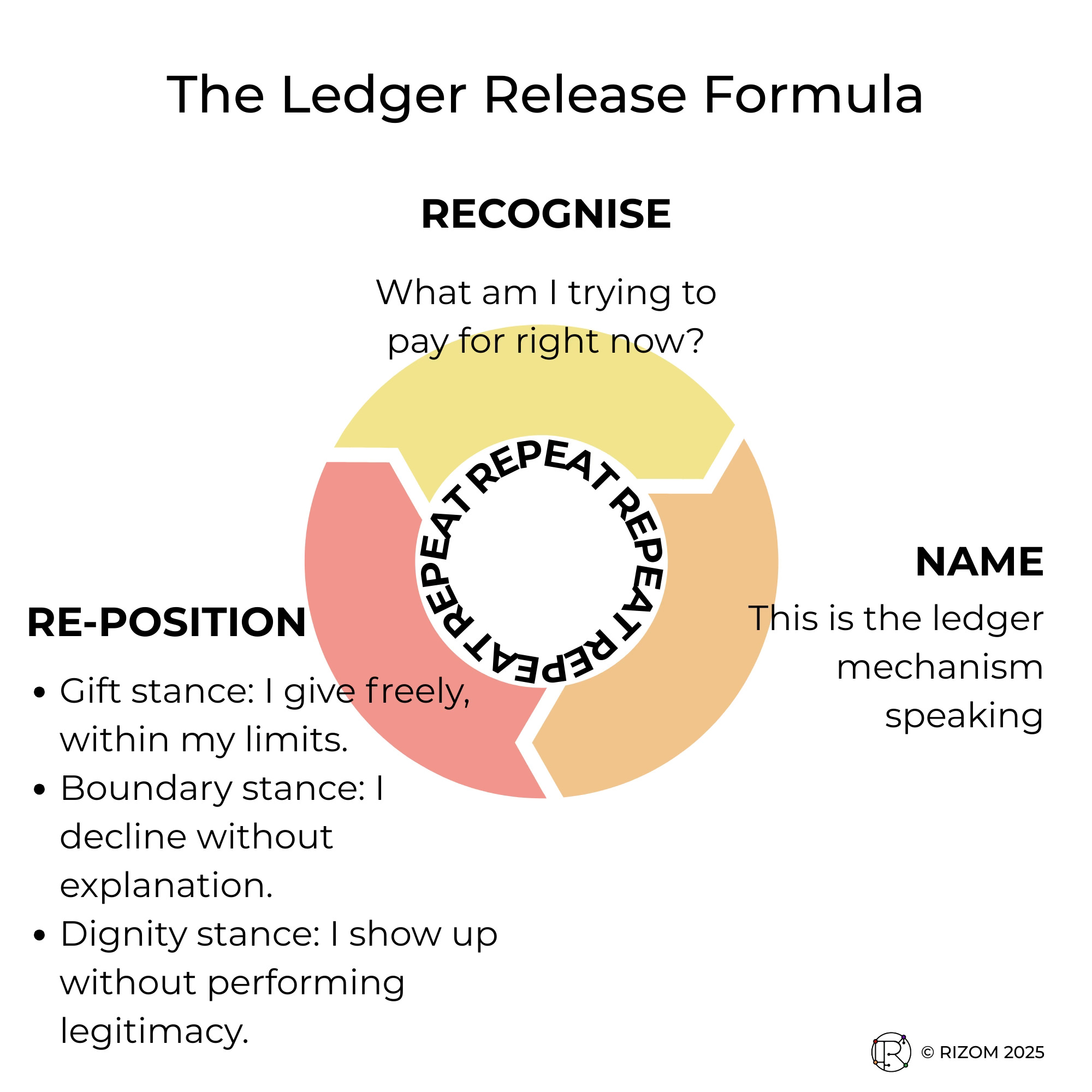
The first signal is recognition. In moments of pressure, a pause opens in which the underlying transaction becomes visible. The question is no longer whether to comply, but what is being paid for. Approval, harmony, belonging, legitimacy, or permission to rest often sit beneath the surface. Naming this internally changes the quality of the moment, even if nothing else changes outwardly.
A second signal is the capacity to distinguish mechanism from reality. When obligation tightens, the experience can be recognised as the ledger speaking rather than as a factual assessment of worth or duty. This distinction does not remove the demand, but it loosens its authority. What once felt unquestionable becomes interpretable.
A third signal appears in one’s posture. Contribution is no longer automatic (the “standing order”). Presence is no longer performative. Choices are made from a defined stance, whether that means offering care within limits, declining without justification, or participating without proving legitimacy. The shift is subtle, but cumulative.
The ledger persists through repetition, and it loosens through repetition as well. Small, consistent deviations matter more than dramatic refusals. Each instance in which interest is not paid reinforces a different internal accounting.
One question often marks this shift. Before agreeing, explaining, or compensating, a pause intervenes to distinguish what is what: is this an act of care freely given, or an interest payment extracted by an invisible account?
When the answer points to interest, allowing the account to remain open becomes a form of signal in itself.
CUE
Five images, five ways of seeing family structure
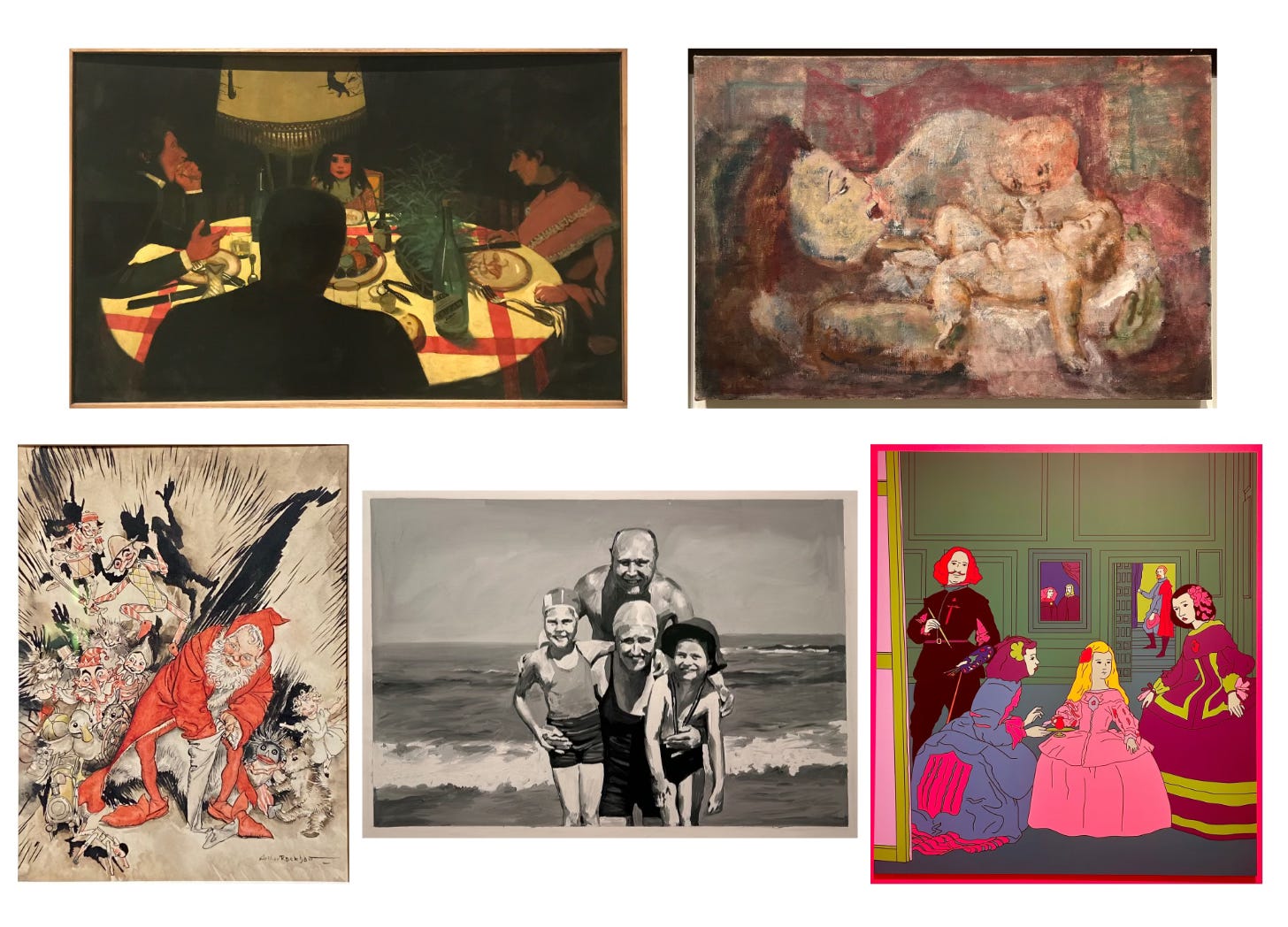
Five works accompany this RIZOM PULSE edition: they do not illustrate family values in a narrative sense. They stage situations in which family appears as structure, pressure, ritual, or fiction. They differ radically in style, period, and intention, yet they converge on a small number of underlying tensions.
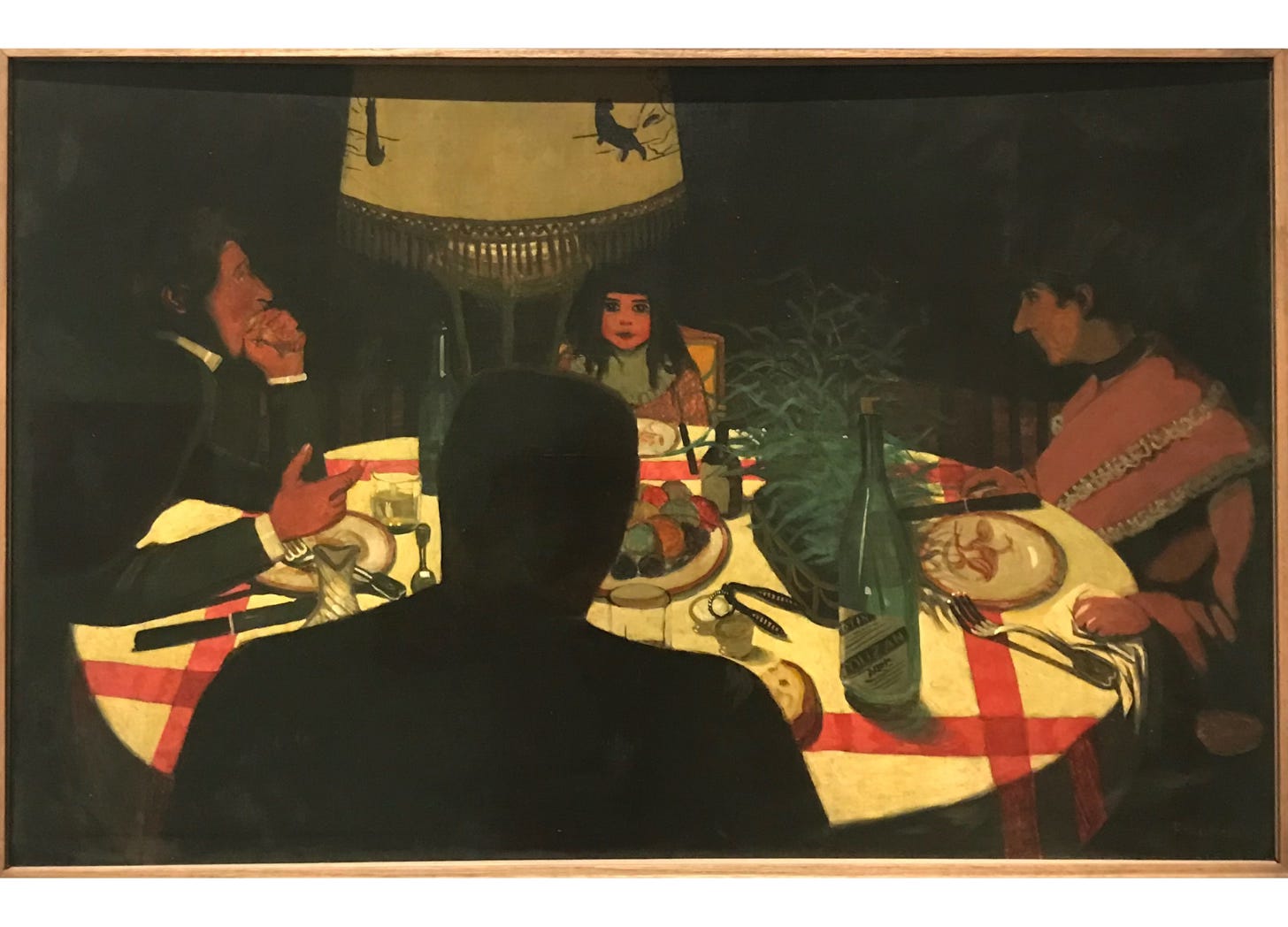
Félix Vallotton, Le Dîner, effet de lampe (1899)
A family sits at table under a single light. The scene is partially blocked by a darkened back, leaving faces lit but relations unreadable. The atmosphere is tense, paused, and unresolved.
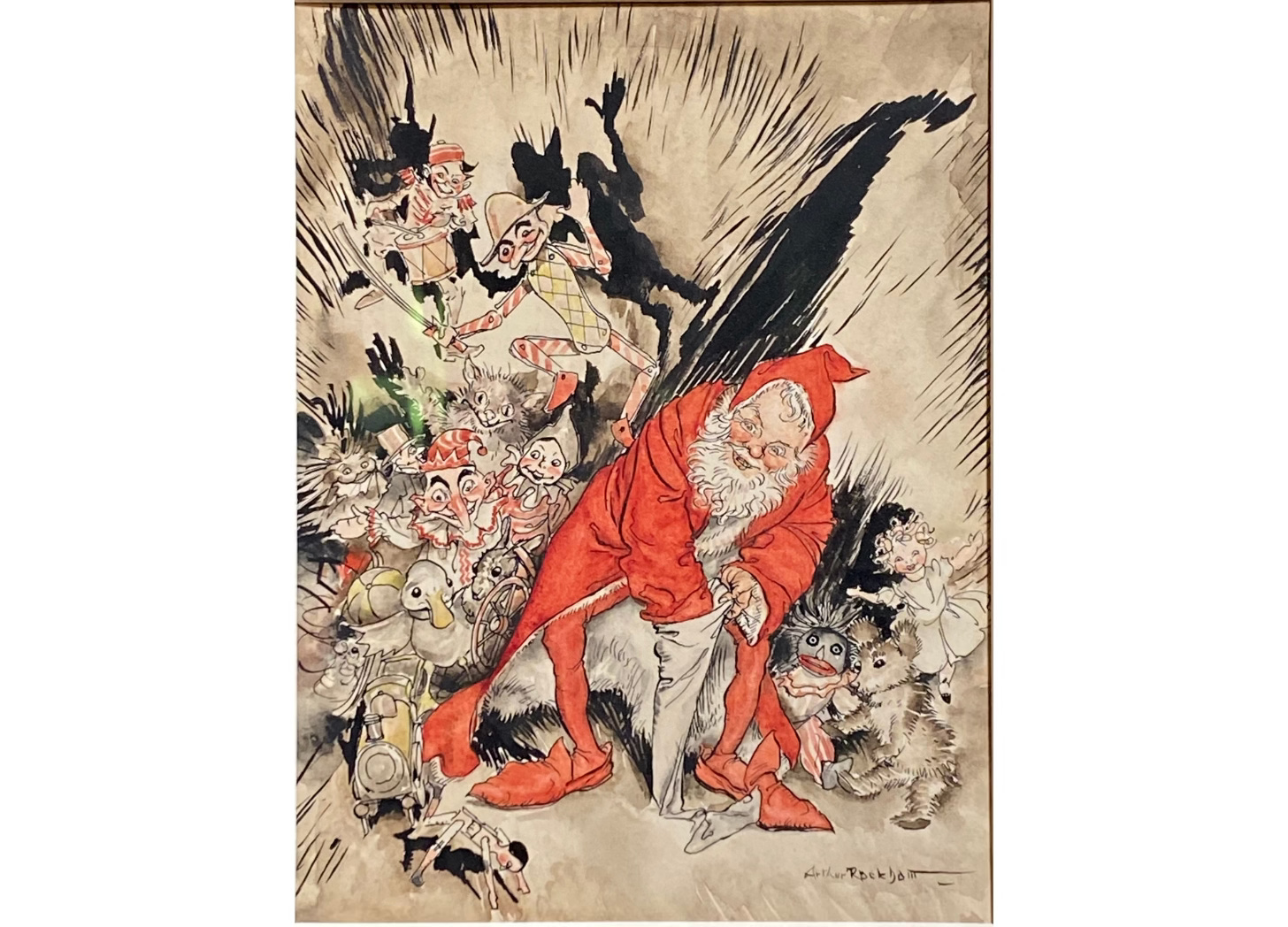
Arthur Rackham, Filled All the Stockings (1931)
A festive scene crowded with figures, creatures, and anticipation. Generosity, magic, and excess coexist with intrusion and surveillance.
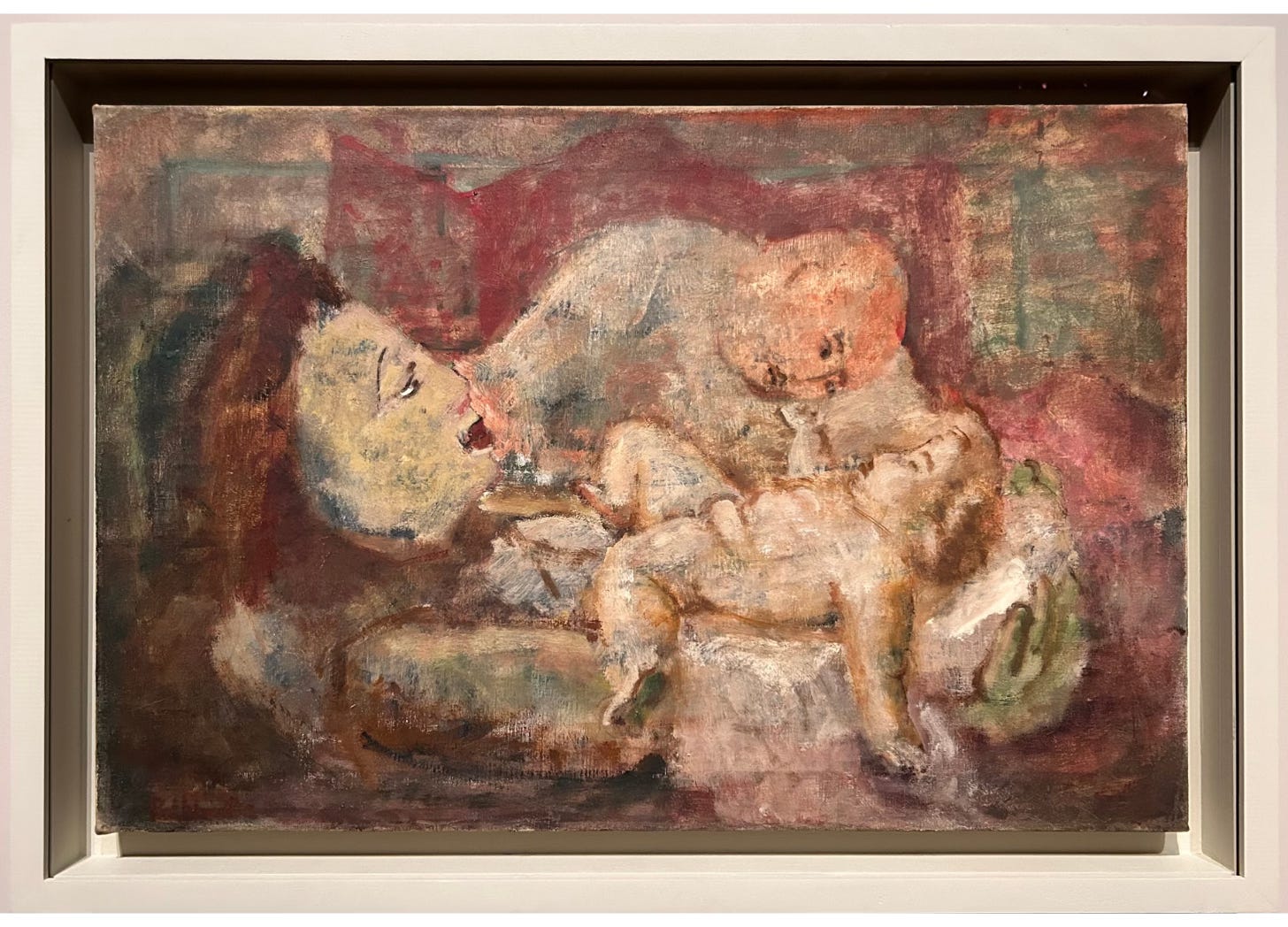
Mark Rothko, Family (c. 1936)
Bodies cluster in a dense, ambiguous composition. Proximity replaces clarity. The family appears less as individuals than as a shared emotional mass.
Gerhard Richter, Familie am Meer (1964)
A family stands together, facing the sea. The pose suggests unity, yet the figures feel slightly misaligned, as if togetherness were held rather than inhabited.
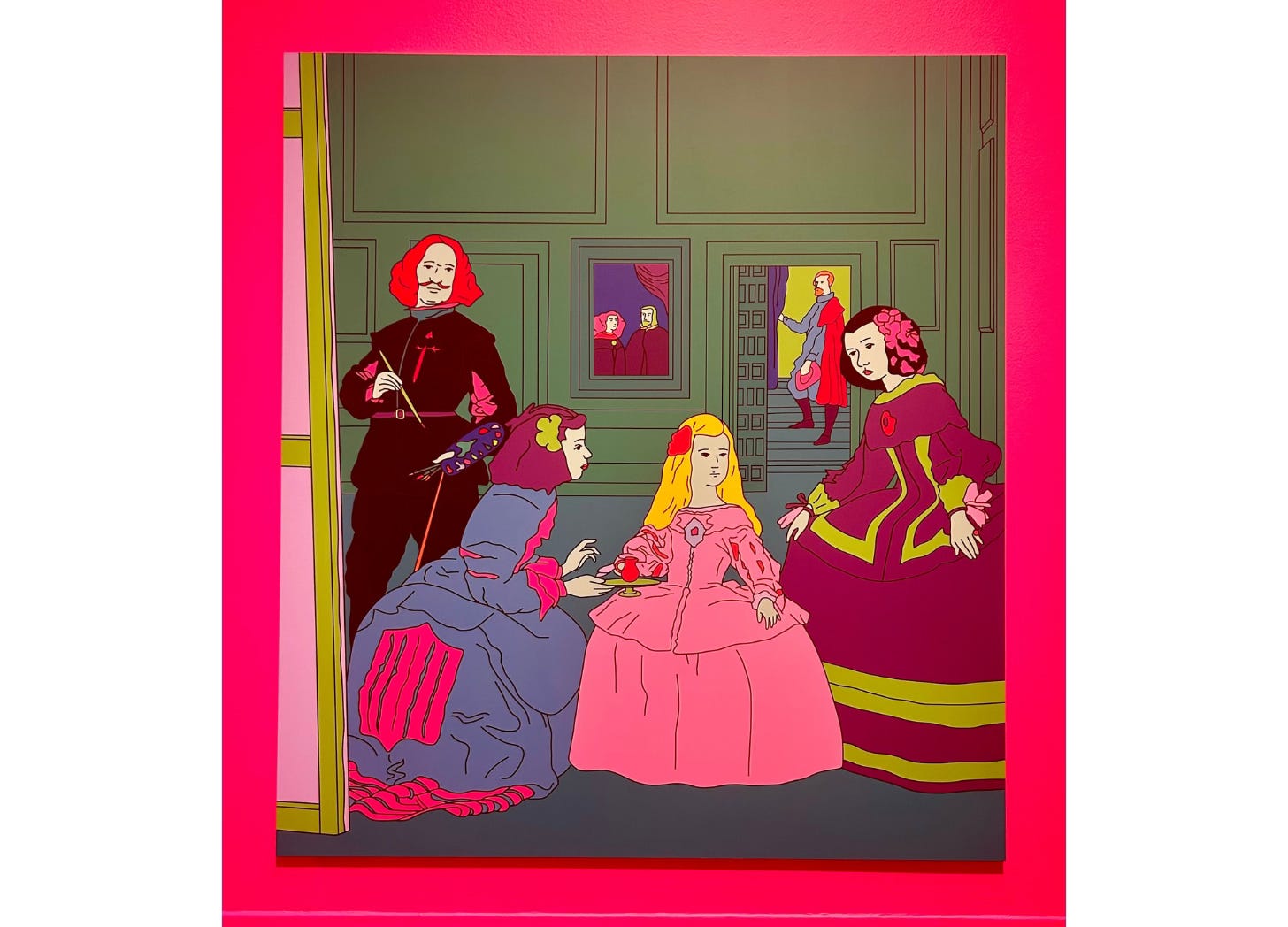
Michael Craig-Martin, Las Meninas (1989)
A radical abstraction of Velázquez’s family tableau. A visual grammar exercise, where roles remain, but bodies dissolve. Structure outlives presence: family becomes a set of Court positions.
Five commonalities
1. Proximity without symmetry
In all five works, bodies are close, but not equal. Attention, space, or visibility is unevenly distributed. Togetherness does not imply balance.
2. Ritual as organising force
Whether through a meal, a celebration, a pose, or a historical citation, each scene is structured by a ritual that dictates behaviour more than affection does.
3. Roles that persist beyond intention
Parents, children, observers, hosts, artists, or benefactors appear less as choices than as positions already assigned. Individuals occupy roles they did not design.
4. Visibility and exposure
Each work stages who is seen, who is centred, and who remains peripheral. Being part of the family means being subject to a shared gaze.
5. Care entangled with obligation
Care is present in all five scenes, but it is never neutral. It is framed, conditional, or costly. What looks like protection often carries expectations.
You’re Already in the Loop.
We’ll choose one to open next week’s PULSE. See you next week as we explore new stories and new resonances.
The RIZOM Team
All photographic credits: Marianne Magnin, 2025